

Russia ´ s full-scale aggression against Ukraine has led to the largest movement of refugees since the World War II. Conflict in Ukraine has caused civilian casualties, destruction of civilian infrastructure and disruptions of international trade in energy and food supplies. According to UNHCR Operational Data Portal, as of 7th March 2023, 4 890 639 refugees from Ukraine have registered for temporary protection or similar national protection schemes in Europe and more than 8 million refugees have been recorded across Europe. Most fleeing from the war have settled in neighbouring countries (approximately 24% in Poland, 23% in Germany and 11% in Czech Republic). Compared with the population of each EU Member State, the highest ratio of Ukraine war refugees granted temporary protection per thousand have been recorded in Cyprus (1,0), Estonia and Poland (both 0,8).
As a landmark decision, on 4th of March 2022, the Council of the EU unanimously activated the Temporary Protection Directive (TPD) for the first time. Marking one year since the activation of the TPD, EU Member States have either activated the TPD or applied similar schemes to provide security and social guarantees such as the right to education, employment, medical care and emergency assistance. As a year has passed since activating the TPD, it is possible for the host countries to reflect upon the challenges and lessons learnt so far.
While Russian offensive is still ongoing, the outcome of the war remains uncertain. Even though majority of refugees wish to go back to their homeland, it is not yet possible to go back in a safe and sustainable way. At the same time, human capital of the displaced millions will be essential for restoration and recovery of Ukraine. This leads to questions related to long-term solutions for war refugees in host societies and the future of Ukraine.
As more than a year has passed since activating the TPD, EMN Estonia National Conference seeks to answer these questions by dedicating half-day to retrospect and conclusions via experiences of our own as well as neighbouring countries and another half-day for future scenarios and ways forward. The conference aims to bring together policy-makers, representatives from EU Institutions/Agencies, practitioners, academics and experts from Member States and beyond.
Conference Recording
Agenda:
09.00 – 09.30 Registration and morning coffee
09.30 – 09.50 Opening the conference and welcoming remarks
- Egert Belitšev, Director General of the Police and Border Guard Board
- Magnus Ovilius, European Commission
09.50 – 10.40 Keynote and introductory speeches
- Forced Migration from Ukraine after 2/2022: Looking back and looking forward: Reappraisal and future scenarios, Franck Düvell, senior researcher, Osnabrück University Institute for Migration Research and Intercultural Studies (IMIS)
- Temporary protection – one year on, Cecilia Verkleij, DG Home Asylum Unit, COM
10.40– 11.00 Coffee break
11.00– 13.00 Session 1: Reflecting on One Year of TPD Activation: Challenges, Lessons Learned and Best Practices
The first panel will provide an insight and conclusions from Member States after one year has passed from activating the TPD. What have been the main challenges, lessons learnt, but also good practices with regards to reception of the war refugees. The panel discussion will also look into topic of secondary movements of beneficiaries of temporary protection in the EU as well as issues with the EU external border crossings.
Moderator: Kerli Zirk, Ministry of Economic Affairs and Communications
- Temporary protection in Finland – challenges after activation of TPD, Jutta Saastamoinen, Advisor, EMN Finland, Finnish Migration Service (Migri)
- Latvia – Current State of Play, Ilze Briede, Office of Citizenship and Migration Affairs of Latvia
- Temporary Protection Directive in Lithuania: home away from home,Agneta Ladek, Ministry of the Interior of the Republic of Lithuania
- Lessons learned from the activation of Temporary Protection Directive – one year after. The case of Poland, Ewa Poławska, Ministry of Interior and Administration of Poland
- Temporary Protection in Estonia,Liis Valk, Police and Border Guard Board of Estonia
Followed by moderated discussion.
14.00– 15.50 Session 2: Planning for the Future
In this panel, speakers will reflect upon the long-term plans and future scenarios regarding the reception of war refugees. Panelists will also reflect upon the questions on long-term crisis management, population projections, long-term inclusion plans for war refugees and future of Ukraine.
- Overview of the Migration Situation in Ukraine and Response to Challenges Caused by Russian Aggression, Dmytro Horban, State Migration Service of Ukraine
- Planning the Future, View from the Embassy in Kyiv and Development Cooperation, Kaimo Kuusk, Ambassador Extraordinary and Plenipotentiary, Estonian Ministry of Foreign Affairs
- The implications of Russian aggression to migratory flows and border management, Uku Särekanno, Frontex
- Canada’s immigration measures and support for Ukrainians: An overview, Veronica Coulter, Mission of Canada to the EU
- Working towards dual intent integration, Ave Lauren, OECD
15.50– 16.00 Closing remarks
The conference is moderated by Mr Allan Rajavee.
Presentations
Keynote speech:
- Forced Migration from Ukraine after 2/2022: Looking back and looking forward: Reappraisal and future scenarios, Franck Düvell, senior researcher, Osnabrück University Institute for Migration Research and Intercultural Studies (IMIS)
Session 1: Reflecting on One Year of TPD Activation
- Temporary protection in Finland – challenges after activation of TPD, Jutta Saastamoinen, Advisor, EMN Finland, Finnish Migration Service (Migri)
- Latvia – Current State of Play, Ilze Briede, Office of Citizenship and Migration Affairs of Latvia
- Temporary Protection Directive in Lithuania: home away from home, Agneta Ladek, Ministry of the Interior of the Republic of Lithuania
- Lessons learned from the activation of Temporary Protection Directive – one year after. The case of Poland, Ewa Poławska, Ministry of Interior and Administration of Poland
- Temporary Protection in Estonia, Liis Valk, Police and Border Guard Board of Estonia
Session 2: Planning for the Future
- Overview of the Migration Situation in Ukraine and Response to Challenges Caused by Russian Aggression, Dmytro Horban, State Migration Service of Ukraine
- Canada’s immigration measures and support for Ukrainians: An overview, Veronica Coulter, Mission of Canada to the EU
- Working towards dual intent integration, Ave Lauren, OECD
Speakers:
 |
Allan Rajavee is a media expert and former journalist, who previously worked for the Estonian Public Broadcasting (ERR) and the business daily Äripäev. During his career as a journalist, Allan Rajavee has addressed migration related topics and issues. Currently, Mr. Rajavee works as an analyst and consultant at Station, a company specialising in media monitoring and analysis. |
 |
Kerli Zirk has been designing adaptation policy for new immigrants for more than 6 years in the Ministry of the Interior as well as in the Ministry of Culture. Currently, she is working as a crisis management adviser at the Ministry of Economic Affairs and Communications, where her main topics are cyber, digital and communications preparedness for crises. Ms Zirk has a master’s degree is in comparative politics. |
 |
Agneta Ladek is (since 2020) the Adviser to the Minister of the Interior of the Republic of Lithuania. 2004–2012 and 2020 she worked as an adviser to the Members of the Parliament, 2006-2009 as a lecturer and consultant, and 2012-2017 as the Head of a Charity Foundation. She actively contributes to managing the refugee flows in Lithuania caused by the Russian war against Ukraine as well as of the humanitarian aspect of managing the consequences of irregular migration flows caused by the Belarusian regime’s hybrid attack on Lithuania and the European Union. She has master degree in Business administration and international management. |
 |
Ave Lauren is a comparative migration policy expert at the International Migration Division of the Directorate for Employment, Labour and Social Affairs at the OECD. Her current work at OECD focuses on the Ukrainian refugee crisis. Prior to joining the OECD, she worked in different capacities at the European Migration Network (EMN), including coordinating EMN’s cooperation activities with non-EU countries and heading the National Contact Point for Estonia. She holds a Ph.D. in Geography from the University of Cambridge, where her research focused on highly skilled migration from Asia to the United States. |
 |
Cecilia Verkleij works as Deputy Head of Unit of the Asylum Unit in the Directorate General Migration and Home Affairs of the European Commission. After gaining a degree in law from Leiden University, she worked as a lecturer Constitutional Law and research fellow European Law at the University of Tilburg, and as a civil servant with the European Commission, where she has worked with a number of services, including the DG for Competition and the Internal Market. Her expertise covers human rights, information exchange and data protection in the areas of law enforcement and security, and free movement of persons within the Schengen area. |
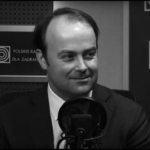 |
Dmytro Horban is the Deputy Head of the Department for Information and Analytical Support at the State Migration Service of Ukraine. Within his duties, Mr. Horban is one of the SMS representatives, responsible for supporting the processes of the European integration of Ukraine in the field of migration. Taking into account the previous experience in the field of international relations and consular affairs, Mr. Horban is currently coordinating the development of the cooperation between SMS and the European Commission in the framework of the European Migration Network. |
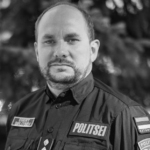 |
Egert Belitšev is the Director General of the Estonian Police and Boarder Guard Board. From 2020-2023, Mr. Belitšev worked as a Deputy Director General for Border Management. He has worked in the Police and Border Guard Board in different positions in the field of migration management since 2010 and previously in the Citizenship and Migration Board from 2006-2009. Egert Belitšev has Master of Laws degree from Tartu University. |
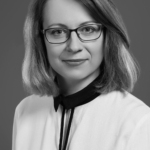 |
Ewa Polawska is a Chief Specialist for the Migration and Border Policy Unit at the Ministry of Interior of Poland. She is an expert in the field of migration and asylum responsible for leading EU affairs and policy-making in the above-mentioned area, in particular the Common European Asylum System. In 2008-2020 Ms. Polawska worked in the Office for Foreigners as an expert in the field of return and reception. In 2016-2020, she was responsible for supervising centres for asylum seekers run as the Head of the Unit in the Department of Social Assistance. Ms. Polawska is also a long-term collaborator of IOM Poland, long-term EUAA collaborator and currently National Contact Point for IDS EUAA. |
 |
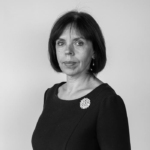
Dr. Franck Düvell is a senior researcher and coordinator of forced migration and refugee research programme in Osnabrück University, Institute for Migration Research and Intercultural Studies. Previously, he was head of the migration department at the German Institute for Integrations and Migration Research (DeZIM) and associate professor at the Centre on Migration, Policy and Society (COMPAS), University of Oxford. |
 |
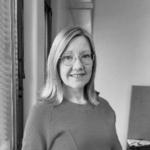
Ilze Briede is the Head of the Migration Division at the Office of Citizenship and Migration Affairs of Latvia. She has long-term experience in the Office of Citizenship and Migration Affairs of Latvia, solving issues related to the field of visas and residence permits and participating in working groups organized by the Council of the European Union and the Commission on this topic. Regularly participates in the drafting of national regulatory acts and adoption of European Union legislation in the field of migration. As an expert, she has participated in several international projects financed by the European Union and ICMPD, the purpose of which is related to the improvement of management and regulatory acts in the field of migration. |
 |
Jutta Saastamoinen is a senior specialist for the European Migration Network (EMN) Finland. She has been working for EMN Finland as a senior specialist since 2014. She has previously worked as a senior adviser at the Asylum Unit of the Finnish Immigration Service and as a researcher at the Country of Origin Information Unit of the Finnish Immigration Service. Ms. Saastamoinen holds a Master of Philosophy degree in Russian and East European Studies from the University of Oxford and a Master of Arts degree in International Relations from the University of St Andrews. |
 |
Kaimo Kuusk is the Ambassador Extraordinary and Plenipotentiary of the Republic of Estonia to Ukraine. Kaimo Kuusk is an Estonian diplomat and a former Foreign Intelligence Service officer. Since 2019, he has been the Estonian Ambassador to Ukraine. |
 |
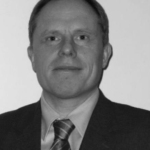
Liis Valk is the legal status determination service owner and a group lead in the Estonian Police and Border Guard Board. Ms. Valk has worked in the Police and Border Guard Board in different positions in the field of migration management since 2010 and previously in the Citizenship and Migration Department from 2005-2009. Ms. Valk has a mag. Iur. degree from Tartu University. |
 |
Magnus Ovilius is the Head of Sector for the European Commission’s Home Affairs Migration Forecasting, Contingency Planning, Preparedness and Policy Monitoring. He is also chair and Manager of the European Migration Network. |
 |
Uku Särekanno is serving as a Deputy Executive Director for European Border and Coast Guard Agency´s (Frontex) Information Management and Processes. He is responsible for the implementation of the European Travel Information and Authorization System (ETIAS) and interoperability framework. He is also in charge of the Agencies corporate functions related to ICT, financial management, security and facilities. His tasks involve oversight and coordination of the ETIAS Central Unit Division and Financial, Digital and Security Division. Mr. Särekanno holds a Master of Law from University of Tartu (Public Administration). During his 19-year-long career, Mr Särekanno has worked in senior level positions in the Estonian public administration and European Union institutions. |
 |
Veronica Coulter is the Minister-Counsellor (Migration) at Canada’s Mission to the European Union. Prior to joining the Mission in Brussels, Ms. Coulter was the Area Director (Migration) for Latin America/Caribbean based in Mexico City, overseeing operations of the Immigration, Refugees and Citizenship Canada (IRCC) offices covering Mexico, Central and South America and the Caribbean. She has managed all aspects of Canada’s migration programs in Mexico and Morocco, and refugee resettlement from Egypt and Sudan. Other postings include The Hague, where she covered issues related to human smuggling and trafficking, and a secondment to UNHCR’s Regional Office in Cairo, Egypt. |