


Labour migration of third-country nationals has become a key issue in EU migration policy, impacting economic development and competitiveness. While labour migration has grown in many EU countries, the demand for skilled workers continues to rise, driven by an aging population, technological advancements, and the green transition. As similar trends affect most Member States, intra-EU mobility alone cannot meet the demand, making an additional workforce from third countries essential. In addition, Ukrainian refugees in EU member states represent a valuable workforce with significant potential making it important to acknowledge their qualifications and provide targeted upskilling.
The joint conference by EMN Estonia and IOM Estonia will address labour shortages in the EU, offering a platform to share challenges, good practices, and success stories from Member States. It will explore how labour market policies have adapted to economic needs and skills shortages, assess the effectiveness of EU internal mobility, and examine the need for foreign labour. The conference will also discuss the strategies required to attract and integrate skilled workers from outside of the EU while focusing on the development of skills mobility partnerships with third countries, offering insights into sustainable strategies to balance local labour demands while remaining competitive and attractive to migrant workers.
The conference will take place as in person event on 5th December 2024 in Mövenpick hotel Tallinn (Lembitu 12). The working language of the conference is English.
Conference recording:
9.00 – 9.30 Registration and morning coffee
9.30 – 10.00 Opening of the conference and welcoming remarks
- Barbara Orloff – Coordinator, EMN Estonia
- Kari Käsper – Head of Office, IOM Estonia
- Joosep Kaasik – Deputy secretary general for Internal Security, Ministry of the Interior (video)
- Hando Sutter – Managing Director, Estonian Employers´ Confederation
10.00 – 12.00 Understanding current labour market situation
First part of the conference will provide a global perspective on labour market movements, narrowing down to ongoing labour shortages within the EU and open the concept of EU´s labour dilemma on how to balance domestic workforce while remaining attractive in the global talent race. The panel will also explore how Ukrainian refugees have contributed to alleviating labour shortages, with a focus on the recognition of their qualifications and opportunities for upskilling.
- Opening speech by International Organization for Migration (IOM), Elizabeth Warn – Head of Labour Mobility Division, IOM
- Opening speech by European Commission (COM), Clemence Ghighi – Head of sector Talent Pathways, Legal pathways and integration unit, DG HOME
- European Policy Centre, Anastasia Karatzas – Policy Analyst in the European Migration and Diversity Programme
- OSKA: Estonian labour and skills forecasting system, Silja Lassur – OSKA Research Manager
12.00 – 13.10 Lunch
13.10 – 14.20 National strategies and effective labour policies
Second part examines how different EU Member States are addressing labour market shortages through foreign labour policies and national strategies. It will also explore approaches to maximizing the potential of talent already within the country, such as strategies for talent retention and creating pathways for foreign students, interns and others to stay and engage in the labour market.
- New and Innovative ways to attract foreign talents into EU – EMN Inform, Nicoletta Enria – Senior Consultant in Public Policy at ICF
- Czech Republic, point system pilot, shift from being a transition country to destination country, Petra Silovská – Head of the Foreign Employment Department, Ministry of Labor and Social Affairs
- Ireland, shortage occupation lists/critical skills occupation lists, Fatima Aydin – Senior Manager, Fragomen
14.20 – 14.40 Coffee break
14.40 – 15.50 Meeting labour market needs via targeted mobility schemes with third countries
Third part will delve into talent partnerships launched by the Commission as well as targeted skills and talent mobility schemes/partnerships that EU Member States have implemented in collaboration with third countries. Case studies will highlight both the key elements of success as well as challenges and the selection process of third countries for targeted partnerships. Through examples, the panel aims to provide an understanding of the complexities and opportunities that come with labour mobility agreements for both the receiving and sending countries and how to ensure the benefits of mobility for all parties.
- Italian legal framework and recent initiatives on labour mobility from Third Countries, Dr. Elisa Filippetti – Ministry of Labour and Social Policies of Italy (online)
- Finnish Talent Boost Programme and Third-Country Partnerships, Katri Niskanen – Team Leader of Labour Migration and Integration Unit, Ministry of Economic Affairs and Employment of Finland
- Meeting labour market needs via targeted mobility schemes with third countries, Marianne Vantini – Head of the Division for student immigration and regulated professions, Directorate general for foreign nationals in France, Ministry of the Interior of France
15.50 – 16.40 Moderated discussion on labour migration dilemma in Estonia: Finding Balance between Local and Migrant Workers
Participants: Killu Vantsi (Ministry of the Interior), Ulla Saar (Ministry of Economic Affairs and Communications), Berk Erdem (ESTDEV), Jaan-Hendrik Toomel (Estonian Trade Union Confederation) and Merilin Ednasevski (ABB).
Discussion is held in Estonian, translation is provided.
16.40 – 16.50 Closing remarks
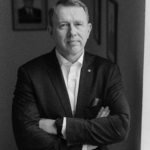 | Joosep Kaasik has a long working experience in the Police and Border Guard Board and in 2023 he joined the Ministry of the Interior as Deputy Secretary General for Internal Security from the position of Prefect of the Northern Prefecture of the Police and Border Guard Board. Mr Kaasik’s areas of responsibility include migration, border management, internal security, as well as crisis preparedness. From 2017 to 2021, he was Director of Administration at Tallinn University of Technology and from 2013 to 2017 Deputy Director General of the Police and Border Guard Board. |
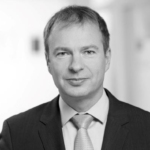 | Hando Sutter has been leading the Estonian Employers’ Confederation team since October 2024. He represents the interests of the Confederation’s members in various organizations and advocates for legislation and the development of the business environment. Hando Sutter has worked as a top executive for over 30 years and has led companies such as Eesti Energia, Nord Pool Spot, Olympic Entertainment Group, and others. He has also been a member of the Employers’ Confederation council and has led the Confederation’s education task force for several years. |
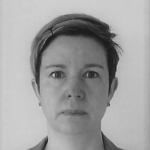 | Elizabeth Warn has worked for IOM since 2001. Since June 2022, she has been Head of the Labour Mobility Division. In this role, she oversees the development and implementation of strategies and initiatives aimed at promoting safe, orderly, and regular labor migration, as well as fostering the social inclusion of migrants. Her responsibilities include guiding IOM’s efforts to enhance labor migration governance, protect migrant’s rights, and facilitate their integration into host communities. |
 | Anastasia Karatzas is a Policy Analyst in the European Migration and Diversity Programme at the European Policy Centre, where her work lies at the intersection of migration, skills and inclusion. Before joining the EPC, she completed an internship in advocacy with the Danish Refugee Council in Brussels. Prior to that and during the completion of her LLM in International Migration and Refugee Law from the Vrije Universiteit (VU) Amsterdam, where her research focus included children in migration and the right to liberty and security in the EU, she was a researcher for the VU’s Migration Law Clinic and an Editor for an online legal journal, the Amsterdam Law Forum. In addition to an LLM, she holds an LLB and a Bachelor of Social Science in International Relations and Law from the University of Cape Town, South Africa. |
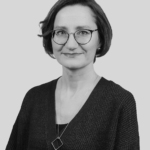 | Silja Lassur is an OSKA Research Manager at Kutsekoda. In her work, she analyses skills and labour needs in different sectors of the economy in the decade to come, combining qualitative and quantitative research methods. Currently, she is participating in a foreign labour force survey, which analyses the occupations in which foreign nationals are employed in the Estonian labour market and what Estonia’s foreign labour needs might be in the medium term. |
 | Petra Silovská is a law school graduate and started working for the Ministry of Labour and Social Affairs (MoLSA) right after her studies. In 2010 she became a diplomat, specifically a labour and social attaché in the Permanent Representation of the Czech Republic in the EU. She dealt not only with labour migration and mobility of workers but also with OSHA, working conditions, anti-discrimination, and gender equality. She participated in the negotiation of the migration directives, such as the Single Permit, Intra-Corporate Transferees, and Seasonal Workers directives. She spent six years in Brussels in this post, and after returning to MoLSA, she joined the international department.
During the Czech Presidency of the EU in 2022, she was the chief negotiator for the directive on equal and transparent pay for women and men, where she managed to achieve a political agreement with the European Parliament. In 2023, Petra became the head of the Unit for Foreign Employment, where she has been since. Her team is responsible for the employment and integration of all foreigners, both from the EU and third countries, into the labour market. |
 | Fatima Aydin is a Senior Manager at Fragomen’s Dublin office with over eight years of experience in the Irish immigration sector, supporting both corporate and non-corporate clients. She partners with clients to address their most complex immigration challenges, specializing in all aspects of Irish immigration law, including employment permits, visa applications, residency applications, and family reunification. In addition to leading the responsible business strategy for the Dublin office—focusing on Diversity, Equity, and Inclusion, Wellbeing, Sustainability, and Corporate Social Responsibility—Fatima also heads pro bono initiatives for the Irish practice. She has been actively involved in various projects related to refugee labour mobility in Ireland.
Before joining Fragomen, Fatima worked in both the non-governmental and corporate sectors, supporting non-EEA nationals. She has held several roles at free legal advice centres that promote access to justice. Fatima is fluent in English, Kurdish, and Turkish. |
 | Elisa Filippetti is a civil servant at the General Directorate of Immigration and Integration Policies of the Ministry of Labor and Social Policy. She is in charge of the activities of the international area, pertaining to cooperation with Third Countries on legal migration for work reasons. |
 | Katri Niskanen leads a team of experts focusing on work- and study-based migration at Finland’s Ministry of Economic Affairs and Employment. Her team is responsible for legislation and policy design surrounding various aspects of labour migration, including talent attraction, residence permit procedures, anti-exploitation measures and international partnerships. She has a legal background and a long-standing experience in public service at national, European and international level. She is passionate about high-quality policymaking and building future-proof labour migration schemes. |
- Opening speech by International Organization for Migration (IOM),Elizabeth Warn
- OSKA: Estonian labour and skills forecasting system, Silja Lassur
- New and Innovative ways to attract foreign talents into EU – EMN Inform, Nicoletta Enria
- Czech Republic, point system pilot, shift from being a transition country to destination country, Petra Silovská
- Ireland, shortage occupation lists/critical skills occupation lists, Fatima Aydin
- Italian legal framework and recent initiatives on labour mobility from Third Countries, Dr. Elisa Filippetti
- Finnish Talent Boost Programme and Third-Country Partnerships, Katri Niskanen
- Meeting labour market needs via targeted mobility schemes with third countries, Marianne Vantini